Tuesday, 17 October 2017

Blog 263

A dusty atmospheric day in the UK on Monday 16th October 2017. Dust from the Iberia fires and Sahara sand. A sun setting in Helston , Cornwall.


Blog 262

A selection of images showing the remnants of storm Ophelia when it arrived in Porthleven, Cornwall on Monday 16th October 2017.


Saturday, 16 September 2017

Blog 261

PAGB News

Rod Wheelans MPAGB MFIAP HonPAGB e-news Editor of the PAGB, has published a gallery of images that have been accepted for the Distinction Award of the Photographic Alliance of Great Britain (DPAGB).
Click here.

Thursday, 31 August 2017

Blog 260

24th August 2017

TOKYO - Nikon Corporation announced the release of the D850, a Nikon FX-format digital full-frame cameras for professional photographers and serious hobbyists for landscape, commercial sports, fashion and wedding genres, and multimedia content. Development of the D850 was announced on July 25, 2017.
The D850 has an effective pixel count of 45.7 megapixels, and supports the ISO 64-25600 range of standard sensitivities (expansion to Lo 1, ISO 32 equivalent and Hi 2, ISO 102400 equivalent is possible). The camera itself is capable of high-speed continuous shooting at approximately 7 fps, but when the optional MB-D18 Multi-Power Battery Pack is used, the rate increases to approximately 9 fps.

Adoption of the same high-speed, high-precision 153-point AF system used by the Nikon D5 camera gives the D850 greater certainty of capturing moving subjects. It has a new backside illumination Nikon FX-format CMOS sensor and the latest image-processing engine, EXPEED 5.

Movie capabilities have also been enhanced even further for multimedia content creators who wish to shoot both stills and videos. With the D850, Nikon introduces its own full-frame recording of 4K UHD (3840 x 2160)/30p movies, as well as 4x and 5x slow-motion movies*3 in Full HD. This will enable impressive expressions of movement in Full HD. In addition, the camera supports the creation of 8K time-lapse videos*4 from still images captured using interval timer photography, while also offering silent photography, and in-camera batch processing of RAW images, all of which demonstrate the strength of the D850 as a multimedia digital SLR.

The Nikon D850, combined with the power of an extensive selection of Nikkor lenses, greatly expands the possibilities for versatile imaging expression across a wide variety of photographic genres.

Price in the UK circa £3500

Nikon D850


Wednesday, 30 August 2017

Blog 259

Climber in front of the eclipse
The real story behind Ted Hesser and Andrew Studer capturing their iconic images of the total eclipse at Smith Rock, as they plan and ultimately capture some of the most iconic images of the total solar eclipse on 21st August 2017.

Smith Rock State Park is an American state park located in central Oregon's High Desert near the communities of Redmond and Terrebonne.

Video Link click here

Friday, 28 July 2017

Blog 258

Garden visitors over the past few days and months, I have also seen, Common Blue, Large White, Gatekeeper, Peacock and Tortoiseshell butterflies.


Gatekeeper

Small Skipper

Scalloped Oak Moth

Sand Bee burrowing in the gap in the patio slabs
Painted Lady
Slow worm
Newt
Red Admiral


Blog 257

Spectacular sunsets over Helston on the evening of 26th July 2017. Taken using my iPhone.

Taken at 21:11 hours


Taken at 21:22 hours

Tuesday, 25 July 2017

Blog 256

Nikon celebrates 100 Years today

1947 First Nikon Camera
This year, on July 25th to be exact, Nikon will have reached its 100th anniversary.  One hundred years of continuous invention, evolution and constant re-invention. It is a cauldron of ambition, yet it is an ambition to provide quite simply the best optical designs, make the best cameras and merge the best technologies to give you the perfect vehicle for capturing your images. Nikon's 100 year celebratory website here.

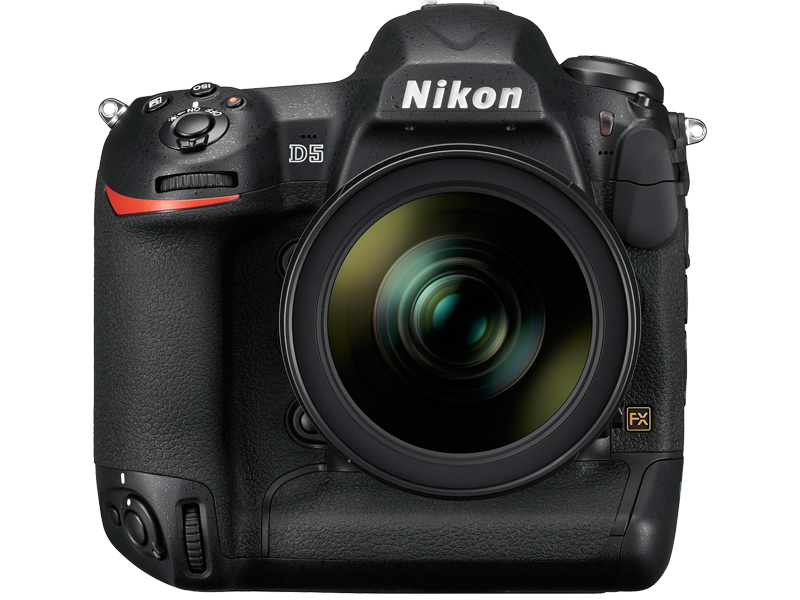
2017 Nikon D5

Blog 255

PAGB News

Rod Wheelans MPAGB MFIAP HonPAGB e-news Editor of the PAGB, has published a gallery of images that have been accepted for the award CPAGB:
Click here

APM Awards

Levels

The Awards for Photographic Merit (APM) are open only to members of Clubs affiliated to the PAGB through their Federations and are at three levels

Credit (CPAGB) – Blue badge and certificate
Standard: Good Club Photography
Distinction (DPAGB) – Red badge and certificate
Standard: Open Exhibition Photography
Master (MPAGB) – Yellow badge and certificate
Standard: Highest Standard of UK Amateur Photography
The awards are held for life without any annual fee and holders are entitled to use the designated letters after their name.

Media

Applications in still images may be with prints or projected images, but not a mixture.

Qualification

Applicants must qualify in accordance with their Federation’s criteria as an active member of an affiliated Club. This support must have been given for a minimum of 2 years for CPAGB, 3 years for DPAGB and 5 years for MPAGB from current active photographers. A retrospective period of 10 years may be considered. Applicants for MPAGB must have held DPAGB for at least 11 months on date of application.

Applications

Applicants must apply first to their Federation for confirmation of their eligibility. The procedures are available from each Federation.

Your Federation will then provide an authenticated PAGB application form, which is sent, with the fee, to the PAGB Awards Secretary:
Daphne Hanson DPAGB APAGB
16 Meadowlands
Burwell, Cambridge, CB25 0HG
Tel: 01638 741106 E-mail: hanson16@virginmedia.com

Adjudications

Adjudications are held at least twice a year, and there may be catch-up sessions. The aim is that nobody has to wait for more than a year from the time of application. Upcoming dates and Federation hosts are advertised in the Diary.

Applicants accepted for a given adjudication will receive an entry pack by email, including an account/password for the on-line entries system to declare titles and provide image files.

TICKETS: Adjudications are hosted by Federations on the rota shown in APM-Leaflet 5. Unless the event is advertised as closed, applicants may attend for no charge, and observers may purchase tickets to attend. Tickets are available via the host Federation.

Information Leaflets

The leaflets have been generally updated at August 2016 especially to reflect the new method of submitting entries for the APM events.

Prospective applicants must read the relevant information leaflets about the APM system, as well as their local Federation procedures.

Leaflet 1. A General Description of the APM system, with FAQ (Jun-17)
Leaflet 2. Guidance for Entering PDI & Prints (Jun-17)
For background information, these leaflets are administrative.

Leaflet 5. Hosting arrangements for Federations, including the hosting rota (Jun-17)
Leaflet 7. Support for Federation APM Workshops (Jun-17)
Leaflet 8. Advice for Mentors (Jun-17)

APM Awards

Blog 254

British Photographic Exhibitions (BPE)

Members of Photographic Clubs may wish to enter a selection of their images into these national exhibitions, to gain the distinctions awarded by this organisation.
This is a statement from British Photographic Exhibitions (BPE):
"The BPE exists to encourage photographers to enter exhibitions and to recognise successful entrants via the issue of the Crown Awards photographic distinctions. Exhibition members share ideas, promote each other's exhibitions and generally work together to promote competitive photography."
The BPE website can be reached by clicking here.
For those starting from scratch the system is as follows:
You can enter any of the BPE member exhibitions listed on the BPE web site. Click here for the complete list. Many of the exhibitions now are accepting online entries which makes it much easier, some still require you to create a compact disc (CD) of your entry
With each image that you have accepted, in an exhibition, you accrue one point. Other awards are made and generally consist of gold, silver medals and ribbons.
When you have accrued 25 points you can apply to the BPE Awards Officers (Alison and Andy Fryer via the web contact form: http://www.britishphotographicexhibitions.org.uk/index.php/contact for an application form for the One Crown Award.
They will send you an application form to fill in listing the year, exhibition, section and numbers of acceptances. Then the address to send your completed application to is BPE Crown Awards Officers, 38 Oldacre Lane, Brocton, Stafford, ST17 0TW.
Following their verification of the form you will be sent your Certificate and Ribbon and be entitled to use “BPE1*” after your name.
You can continue this process until you reach “BPE5*” for which you will have to have gained 300 points. You are then eligible to start working towards the ABPE (Associate) then FBPE (Fellow), which require specified numbers of awards as well as acceptances.
There is no charge for any of these services, except for the individual exhibition entry fees payable to BPE club exhibitions which you wish to enter.
The BPE currently consists of 22 members exhibitions. These are typically organised by either a single photographic club or by a number of clubs in the same geographical area. Currently (2016) these consist of the following (in alphabetical order):
  • Alba Photographic Group
  • Basingstoke Camera Club Exhibition
  • Bebington Salon of Photography
  • Beyond Group
  • Clay Cross National Projected Image Exhibition
  • Cotswold (Monochrome)
  • Dingwall National Projected Image Exhibition
  • Frome Wessex Salon of Photography
  • Great Barr Open Exhibition
  • Great Barr PS Panels Exhibition
  • Guernsey Salon of Photography
  • Neath & District PS Salon
  • Robin Hood Open Digital Exhibition
  • Rushden Open Photography Exhibition
  • Shrewsbury Open Photography Exhibition
  • Solihull Open Exhibition of British Photography
  • South Birmingham Open Digital Exhibition
  • Southport National Open Exhibition of Photography
  • SRGB Photo Group - Print Celebration
  • Vale of Evesham National Photographic Exhibition
  • Winchester National Exhibition
  • Yardley Photographic Society Exhibition
Each exhibition will have its own photographic classes e.g. Natural Colour, Photorealistic Colour, Creative Nature, Monochrome and Landscape etc., some exhibitions will have the same categories, however they do vary from exhibition to exhibition. Read the entry class conditions carefully. Ensure that the images are correctly sized and are saved in the correct colour space and pixel size that the organizers require.
Just to reiterate check the rules and definitions for each exhibitions as they are all different.
When entries are carried out online, entry fees are usually calculated automatically and payment is usually made through the PayPal organisation.
Here is a complete list of the BPE awards:
  • BPE1 Crown Award - 25 points
  • BPE2 Crown Award - 50 points 
  • BPE3 Crown Award - 100 points 
  • BPE4 Crown Award - 200 points 
  • BPE5 Crown Award - 300 points
This information is correct at the time of writing this document, please check the BPE site as new exhibitions are added regularly, some are removed and other details may change from time to time.
One of the most important aspects of entering the BPEs is good record keeping. Many Club members who are entering these exhibitions keep their entries and results on a spreadsheet. Accompanying this document is an example spreadsheet which will illustrate how they can be used to enter details of the exhibition entered, the timings of the event e.g. the closing date, the selection date, results publishing date and the awards ceremony. The spreadsheet will also include the images entered in the individual classes and a record of the scores of each individual image and whether it was accepted and also whether it was awarded a medal, a BPE ribbon, a Certificate of Merit or whether it was commended. The spreadsheet will also include a running total of the points accrued from each exhibition. As will be noted from the example spreadsheet the total exceeds 25 so an application can be made for the BPE1* award.
It is worth noting that as long as the image/s fulfill the criteria of one exhibition there is no reason why the same image/s cannot be entered into another exhibition as long as they meet the criteria of that exhibition.
Those who achieve the top crown award rating BPE5* are then invited to aggregate acceptances and awards in the member exhibitions and upon reaching the accepted aggregate to apply, without charge, for Associateship ABPE and Fellowship FBPE. The successful applicant will receive a Certificate and Medal and will be able to use the letters acknowledging their award after their name.
ABPE and FBPE
From 1997 British Photographic Exhibitions has been offering its premier awards to be known as Associateship of British Photographic Exhibitions, ABPE, and Fellowship of British Photographic Exhibitions, FBPE..  These awards are designed to indicate consistent achievement of the highest standard over a substantial period of time and will be available only to those who have already achieved the BPE 5* award.   Each person achieving the BPE5* award will automatically receive personalised record forms to enable them to maintain the records necessary for Associateship and each person gaining this award will receive similar forms to enable them to maintain the records for Fellowship.
The new awards will require not only the continued ability to gain acceptances in the affiliated exhibitions but also the ability to gain awards in these exhibitions.
Details of the requirements for successful application for these awards are as follows:
Associateship of British Photographic Exhibitions (ABPE).
Those who already hold a BPE5* award may apply for an Associateship when they have achieved the following since gaining the BPE5*:
A further 100 acceptances in member exhibitions.
and
Twenty awards using at least ten different pieces of work.
An award includes any recognition beyond an acceptance such as a commendation, a ribbon or a medal.   A photograph used in both print and projected sections in member exhibitions will not be counted as different pieces of work in applying this requirement.
It will be required that applicants for ABPE application will supply a printed thumbnail, with titles, of the awarded images.
Fellowship of British Photographic Exhibitions (FBPE)
Those who already hold an ABPE may apply for a Fellowship when they have achieved the following since gaining the Associateship
A further 100 acceptances in member exhibitions
and
Thirty awards since gaining the ABPE using at least fifteen different pieces of work which have not been previously awarded
An award includes any recognition beyond an acceptance such as a commendation, a ribbon or a medal.   A photograph used in both print and projected sections in member exhibitions will not be counted as different pieces of work in applying this requirement.
It will be required that applicants for FBPE application will supply a printed thumbnail, with titles, of the awarded images.
No fee will be charged to those applying for these awards.   A certificate and medal will be awarded to each applicant achieving these awards and recipients will be able to use the letters ABPE or FBPE after their names.   The awards are intended to represent the highest achievement in exhibition photography and no further qualifications are planned by BPE.
All applications must be made to the BPE Crown Award Officer whose decision will be final.
-----------------------------------------------------------------------------------------------------------------
The awards officers are Alison & Andy Fryer. Either write to them at the address below, or click on this option: http://www.britishphotographicexhibitions.org.uk/index.php/contact to send them an email message via a contact form.
BPE Crown Awards Officers,
38 Oldacre Lane,
Brocton,
Stafford,

ST17 0TW

Monday, 24 July 2017

Blog 253

In October 2015, Nepal was facing acute shortages of fuel, cooking gas, medicines and other supplies because of a blockade of the main border crossings with India by people demanding greater representation in the Himalayan nation’s new constitution.

Nepal’s government termed the standoff as an “unofficial blockade” by India because it blames its neighbour for supporting the Madhesis who are ethnically, linguistically and culturally close to the people of Indian states of Bihar and Uttar Pradesh.

We can see in these pictures how the fuel shortages were affecting the way in which people in Kathmandu, Nepal were transported.

On February 23rd 2016, Nepal ended five months of fuel rationing after persuading protesters to end a border blockade that cut supplies of oil and other goods to the country.

Sunday, 23 July 2017

Blog 252

This panorama was taken on the 10th October 2015. I wonder if the camp is still there?

Vermin and stray dogs roam freely while scavenging birds of prey circle over the foul-smelling, litter-strewn camp that is still home to Nepal’s earthquake victims.

Here in the Chuchepati district in the capital Kathmandu, thousands are stuck living in tents with little food, few job opportunities and no end to their ordeal in sight.

There are almost 1,500 people in the camp, one of eight in Kathmandu. It is home to just a portion of the million people left homeless by the disaster, which killed 9,000 people and injured 21,000.

Each of the camp’s tarpaulin and bamboo tents, which are barely the size of a Western bedroom, houses as many as six people, some many more.

All of this in the the shadow of the five-star hotel, to the right of the camp in the wooded area, right on the refugee camp’s doorstep.

I met and spoke to two small children, brothers, from the camp and understood from them that life in the camp was pretty aweful.

On Tuesday MARCH 14, 2017.

Police in riot gear stood guard as Nepali civic officials used bulldozers to tear down this relief camp in the capital for victims of the 2015 earthquake, in a bid to force people to return to their home villages.

In a Reuters report on this day: "The camps were meant to be temporary shelters for the survivors of the Himalayan nation's worst natural disaster in nearly a century, said Him Nath Dawadi, the capital's most senior bureaucrat.

"They should take the money provided by the government and rebuild their homes now," he added.

But just 76,000 homes have been rebuilt, government figures show, and 553,000 families have received the first installment of nearly $500 in rebuilding aid.

That compares with more than 600,000 families hit by the quake, each of which is entitled to receive $2,000 in aid.

"I don't have any house of my own to rebuild and can't find any room on rent to move from the camp," said laborer Bimal Dulal, 52, who had lived in the Kathmandu camp since 2015."

Saturday, 22 July 2017

Blog 251

After a gap of several years I have decided to re-energise my blog and will occasionally post pictures.

These three images taken on the morning of 10th October 2015 of the sunrise over the Annapurna mountains, from a hillside near Pokhara, Nepal. Pokhara (Nepali: पोखरा लेखनाथ) is a metropolis and the largest city of Nepal in terms of area. Due to its proximity to the Annapurna mountain range, the city is a base for trekkers undertaking the Annapurna Circuit.


Friday, 24 May 2013

Blog 250

My Journey to CPAGB
I am quite familiar with the Royal Photographic Society distinctions as the ten mounted prints for my “L” panel were accepted in July 2010. It took quite a while to work out what the PAGB awards were all about and the procedure to follow to have the prints assessed.

In the N and EMPF region we don’t seem to have a very strong attachment to achieving PAGB Awards for Photographic Merit (APM). In the club to which I belong, Derby City Photographic Club, we have three members with CPAGB. One was awarded in 2011 and two in 2012.

I started to think about putting together a collection of images that might be suitable for CPAGB and to this end put together a gallery of about forty images. In October 2013 I made approaches to a number of people to ask for their help in indicating which images might be suitable.

Bear in mind that one of the entry requirements and the Descriptive Guideline for CREDIT Award (CPAGB) is Good Club Photography

I had excellent support from them all and most were brave enough to actually mark the images as if they were adjudicators. It was as a result of these marks that I began to refine the selection down to the ten images that I would submit to PAGB for adjudication.

At this stage these very able people were looking only at web galleries, and it was to be prints that I would submit for adjudication. I heard that there was to be a PAGB awards workshop as part of the N and EMPF conference to be held in Nottingham over the weekend of 5th – 7th April 2013 and I booked myself a place. The workshop was led by Rod Wheelans assisted by Ian Taylor, CPAGB awards officer with N and EMPF. I took my ten prints for assessment and from feedback from Rod Wheelans I modified four of the prints and had them reprinted. And the following weekend I was in Birmingham for the adjudication.

This process is different from the Royal Photographic Society where a panel is judged as a panel, where with the mounted photographs are seen all at once. With the PAGB adjudication an individual’s prints or PDIs are mixed with other candidates work. So if there are thirty candidates then your first print will appear mixed in with the first prints of the thirty candidates, then the second print etc. etc. A panel of six judges carry out the adjudication.

There are three PDFs that can be downloaded from the PAGB website: here which are of help in understanding what criteria should be met by the applicant, and also a description of how the prints or PDIs are adjudicated. Their titles are:
  • APM Leaflet 1 - General Description and Conditions of Entry - January 2013 
  • APM Leaflet 2 - PDI Guidance Notes Issue 5 - January 2012 
  • APM Leaflet 3 - Questions and Answers Issue 5 - April 2012 
This is the application process that I followed:
  • Access to the facilities of APM is via membership of a club that is affiliated to the PAGB through its Federation. In my case our Club is in the N and EMPF region.
  • Find a convenient location at which the adjudications would take place. These are listed on the PAGB website: here.
  • Contact the Awards Officer of your Federation to obtain an application form. Return it to the Awards Officer, in my case with two cheques one for Credit award £60.00, (Distinction £75.00, Master £95.00) and one for £2 as an association handling fee. N and EMPF’s current Awards Officer is Ian Taylor.
  • Confirmation of my place came from Leo Rich, PAGB Awards Secretary, and the adjudication was to be held over the weekend 20th /21st April 2013, hosted by the Midland Counties Photographic Federation at the Hillscourt Conference Centre, Rose Hill, Rednal, Birmingham B45 8RS.
I would like to mention here the method used for adjudication, reproduced from a PAGB leaflet.
Adjudications in Projected Digital Images (PDI) and Prints are carried out by a panel of six judges, selected from the PAGB Approved List for their photographic skill and their extensive experience. It is impossible to totally eliminate subjectivity but they are carefully briefed as to the standard required in each section.
Photography is more art than science and judges will always be influenced by their emotional response to an image. As in any competition, you should be prepared for some pictures to score higher than you had anticipated and for some to score lower.
Even pictures which have been submitted to a previous PAGB Adjudication may score a little better or a little worse than before.
The Non-Voting Chairman of the Adjudication Panel observes closely throughout the proceedings and has the authority to review near misses on the day.
Each of the 6 Adjudicators is required to Vote on each photograph and their votes are recorded electronically using ‘silent’ scoring equipment. The leaflet explains how they are briefed to reach that decision, how they assess the work at each level and what each vote/score means.
In theory, if a photograph is not up to the required standard, it should receive 6 “NO” Votes = 2 points per judge x 6 = 12 or, if it is well up to the required standard, it should receive 6 “YES” Votes = 4 points per judge x 6 = 24. However it is unrealistic to expect complete unanimity between 6 different Adjudicators and most total scores will represent compromise between these limits.
Scores above 24 are relatively unusual but can be achieved by the very best images. Applicants should be aware that Photographs which would be best displayed as a coherent panel may score less well as individual images.

The Adjudication
The day was a great experience, the atmosphere charged up, with all of those expectant applicants and their supporters full of anticipation of the results from the adjudication. It was carried out in a most organised and professional manner and it was pleasing that at the end of the day I was awarded the badge for CPAGB. One small point I would mention, PAGB get to keep one of your prints. The one they kept of mine was entitled “Breakfast at 8” it scored 24 points.

My selected prints with scores can be seen here.

Thursday, 23 May 2013

Blog 249

CAMBRIDGE AMERICAN CEMETERY AND MEMORIAL

The Cambridge American Cemetery and Memorial site in England, 30.5 acres in total, was donated by the University of Cambridge. It lies on a slope with the west and south sides framed by woodland. The cemetery contains the remains of 3,812 military dead; 5,127 names are recorded on the Tablets of the Missing. Rosettes mark the names of those since recovered and identified. Most died in the Battle of the Atlantic or in the strategic air bombardment of north west Europe. Photographed June 2012.


Saturday, 12 January 2013

Blog 248

Distant hills adjacent to Interstate 17, Arizona, USA, on 25th May 2012

Recession

Eagle Soaring

Blog 247

Wild Cactus adjacent to Interstate 17, Arizona, USA, taken during the journey from Jerome to Phoenix on 25th May 2012. More images here.


Blog 246

Jerome - Gold King Mine and Ghost Town - URBEX - Visited on 25th May 2012
Sitting a mile north of Jerome, the Gold King Mine and Ghost Town is one of the most fascinating attractions in the region. Visitors will find a rustic assortment of ramshackle buildings, the gash of an old mine shaft and a sprawling array of rusted machinery that forever teeters between ruin and redemption. At first glance, the casual ease of the place might be mistaken for neglect but nothing could be further from the truth. This living museum is lovingly tended by a man who looks like he was sent from Central Casting to play the part: Don Robertson ably assisted by Mike. With bushy beard and slouched hat, Robertson is the very picture of a grizzled prospector. But there’s no play-acting going on here. Some people just seem to find their place in the world, where their skills and passion mesh perfectly with their surroundings. Robertson is one of the fortunate few, even if he was born a century late. “This was what I was meant to do,” says Robertson. “I was put on this earth to save this beautiful old machinery. This is the stuff that America was built with there’s no reason for it to be tossed aside or forgotten.” More images here.

Don Robertson - Proprietor Gold King Mine
Mike - Don's assistant